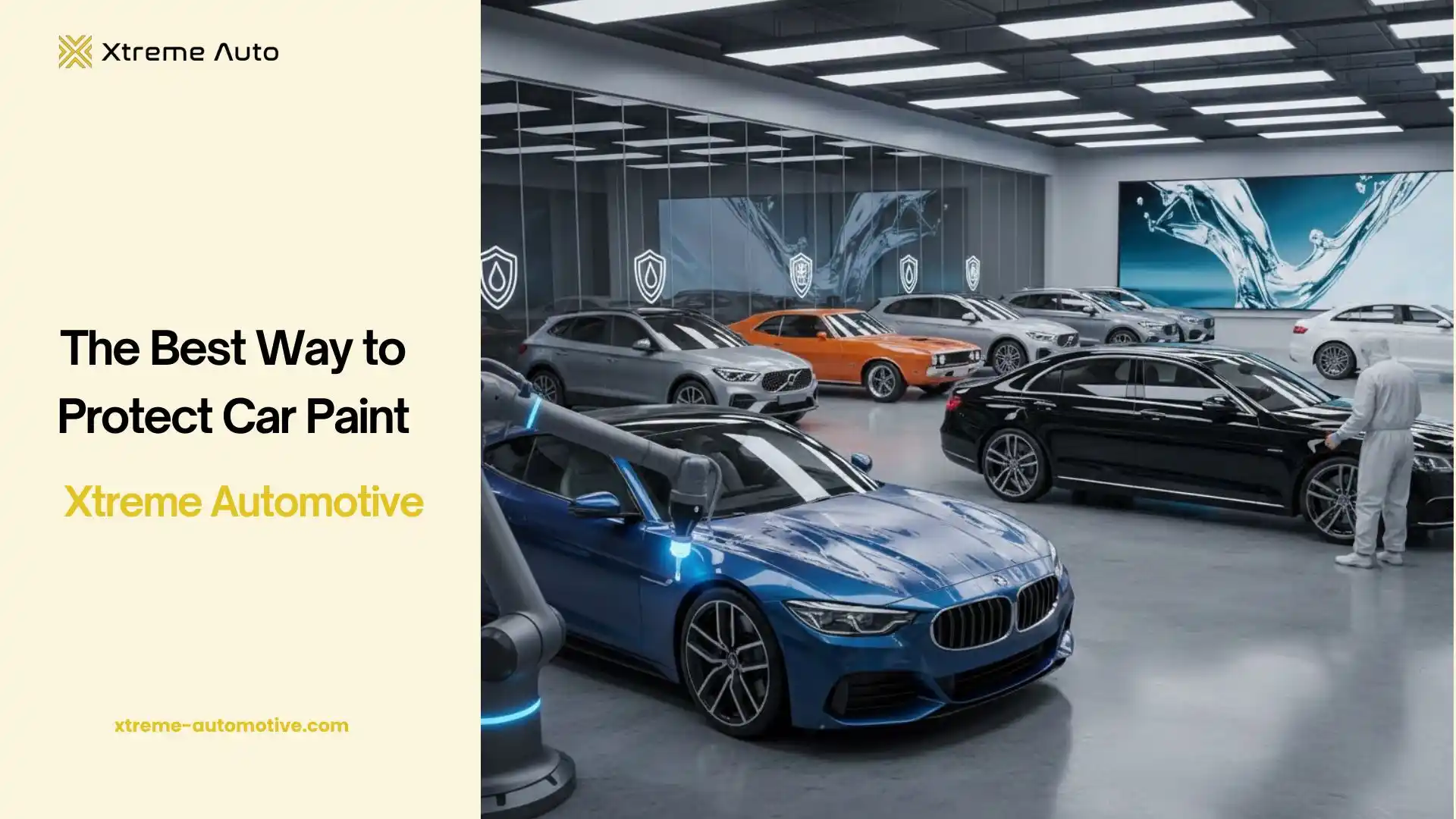
It is no longer a matter of looks but it is a clever expenditure on retaining value, life, and sustained performance of your car paint. The owners of cars are now more conscious than ever of the environmental, climatic, and daily driving forces that can corrupt the paint work over time
It is no longer a matter of looks but it is a clever expenditure on retaining value, life, and sustained performance of your car paint. The owners of cars are now more conscious than ever of the environmental, climatic, and daily driving forces that can corrupt the paint work over time. Choosing the best way to protect car paint helps prevent fading, scratches, oxidation, stains, and costly repainting, while keeping the vehicle looking new and well-maintained for years.
Nowadays, with the extensive availability of modern technology and professional grade solutions, paint protection is more effective, long-lasting, and easier to maintain than the previous methods of protecting the paint, which included: wax or even simple sealants. These are the sophisticated solutions which are meant to deal with the reality of driving under conditions such as hot weather and in cities.
Why Does Car Paint Deteriorate Over Time?
Car paint is not just a cosmetic layer; it is the first line of defense that protects the vehicle’s body. With daily use and continuous exposure to external elements, the paint gradually begins to deteriorate—even on new cars. This mainly happens because the paint reacts chemically and mechanically with the surrounding environment, leading over time to loss of gloss, color changes, and the appearance of scratches or cracks.
Factors That Contribute to Car Paint Damage
Paint damage occurs due to a combination of accumulated factors, most notably:
Sunlight and Ultraviolet (UV) Rays:
Cause paint oxidation, color fading, and loss of depth and shine.
Dust and Road Debris:
Continuous friction with dust and sand leads to fine scratches (swirl marks).
Bird Droppings and Tree Sap:
Contain strong acids that can etch and corrode the paint if not removed promptly.
Chemicals and Acid Rain:
Negatively affect the clear coat layer that protects the paint.
Improper Car Washing:
Using harsh brushes or non-specialized detergents accelerates paint damage.
Climate Changes and High Temperatures:
Cause the paint to expand and contract, which can lead to cracks over time.
Car paint protection prevents corrosion and damage
The paint used on cars is subjected to all these negative factors on a daily basis like extreme sunshine, dust, debris on the road, bird droppings, tree sap, chemicals and unexpected weather variations. Gradually, these may lead to discoloration of the paint, destruction of the surface, and the shine. The paint surface also decays at a higher rate without the level of protection and this lowers the visual appearance of the vehicle as well as its resale value.
Protecting your paint helps:
- Keep the car in its original shine, depth and color.
- Avoid UV destruction, oxidation, and fading of paint.
- Eliminate swirl marks, stains and light scratches.
- Enhance resale and trade-in value.
- Reduce long term maintenance and repaintings.
The Best Way to Protect Car Paint in 2026
The best thing is that there is no one-fit driver but the current methods of protecting a car paint have great long term result when they are selected depending on the driving habit, the environment and the kind of car.
Ceramic Coating
The use of ceramic coating has been regarded as one of the best methods of protecting car paint currently. It forms a long lasting, waterproof coating, which bonds chemically with the paint surface. This is a protective coating that prevents UV rays, chemicals, dirt, water spots, and environmental contaminants in the paint besides adding gloss and color depth.
Paint Protection Film (PPF)
Paint Protection Film is a covering that is made out of transparent tough film that is used to cover high impact zones like the hood, front bumper, headlights, and side mirrors. It is very resistant to stone chips, scratches, and road debris so it can be used in the highway and long distance.
Wax and Sealants
Traditional wax and paint sealants remain cost-effective options for basic paint protection. They provide a smooth finish and a light protective layer against dirt, moisture, and minor environmental contaminants. However, their durability is limited compared to advanced solutions such as ceramic coatings and paint protection film (PPF). Wax and sealants require frequent reapplication and are best used as short-term or seasonal protection, or as an additional layer on top of more advanced paint protection methods in 2026.
Washing on a regular basis and maintenance
Despite the developed protection systems, good washing methods and regular maintenance are also necessary. Applying pH-neutral shampoos, microfiber towels, and non-toxic drying techniques also can be used to prolong the life of ceramic coating and paint protection films.
Comparison of The Common Paint Protection Schemes
- Ceramic Coating: High gloss, long term protection, hydrophobic, low maintenance.
- Paint Protection Film: Physical protection is maximum, impact strength is higher, cost of the film is more expensive.
- Wax and sealants Wax and sealants are short-term shields and less expensive but may have to be used frequently.
Is Paint Protection a Worthwhile Investment?
Investing in the best way to protect car paint saves money over time by reducing repainting costs, minimizing damage, and maintaining higher resale value. In the case of new cars, in particular, early paint protection guarantees that the appearance of a car is in great shape the very first day that it is purchased, including the value in the market.
Xtreme Auto Complete Vehicle Care Solutions
Xtreme Auto is an integrated automotive ecosystem offering complete car services under one roof, providing a wide range of vehicles alongside professional after-sales support.
Xtreme Auto delivers premium vehicle protection solutions, comprehensive insurance plans, and flexible payment options to ensure your car receives the best care throughout its ownership period.
You can visit any of its branches today to explore available models and enjoy a smooth, hassle-free car ownership experience with trusted automotive experts.
