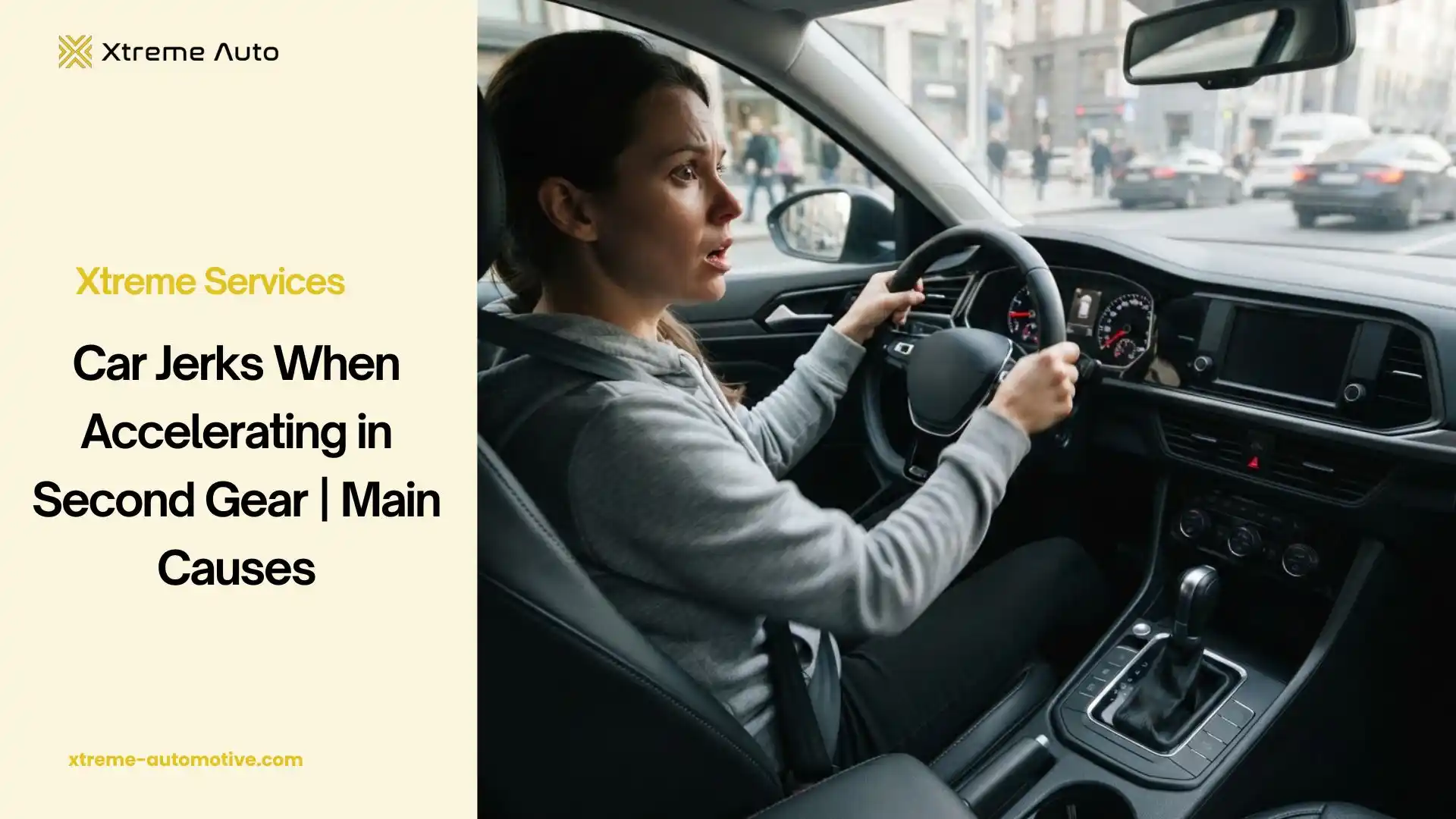
If your Car Jerks When Accelerating, you may notice it feels perfectly norml when pulling away, only to start jerking in second gear as you accelerate or shift
If your Car Jerks When Accelerating, you may notice it feels perfectly norml when pulling away, only to start jerking in second gear as you accelerate or shift.
The hesitation may come with engine vibration, inconsistent power delivery, or delayed throttle response.
Although the symptom may appear to point directly to the transmission, the underlying cause can also involve the ignition system, fuel delivery, engine sensors, clutch, or other drivetrain components.
What Causes a Car Jerks When Accelerating in Second Gear?
Second-gear jerking occurs when the engine or drivetrain cannot deliver power smoothly during acceleration or gear changes The problem may become more noticeable when shifting from first to second because the engine experiences a change in load and torque delivery
Possible causes include:
- Worn or damaged spark plugs
- Weak or failing ignition coils
- Clogged or poorly performing fuel injectors
- Low fuel pressure caused by a weak fuel pump
- A restricted fuel filter
- A dirty or restricted air filter
- A faulty Mass Air Flow MAF sensor
- A malfunctioning Throttle Position Sensor TPS or throttle system
- Other engine sensor faults
- Clutch problems in manual-transmission vehicles
- Low or degraded transmission fluid depending on the transmission type
- Mechanical or electronic transmission faults
- Worn engine or transmission mounts that increase vibration
- Low engine compression caused by an internal mechanical problem
Important A Car Jerks When Accelerating in Second Gear does not automatically have a transmission problem The gear change may simply make an existing engine ignition or fuel-delivery problem more noticeable
Key takeaway Second-gear jerking is a symptom not a diagnosis The source needs to be identified before any component is replaced
Does Jerking in Second Gear Always Mean a Serious Problem?
Not necessarily Some intermittent hesitation can occur under specific operating conditions such as when the engine is cold when fuel quality is poor or when routine maintenance has been delayed
However recurring jerking should not be ignored—especially when it is accompanied by other changes in vehicle performance
Watch for symptoms such as
- Noticeable loss of acceleration
- Significant vibration while driving
- Delayed throttle response
- Unstable engine RPM
- A Check Engine warning light
- Increased fuel consumption
- Unusual engine or transmission noises
- A burning smell
- Abnormally high engine temperature
- A transmission warning message
If several of these symptoms appear together professional diagnosis becomes more important because the problem may involve more than a simple drivability issue
When Does Car Jerks When Accelerating in Second Gear Require Urgent Inspection?
A mild occasional hesitation is different from severe jerking accompanied by major performance loss
If the vehicle experiences severe jerking substantial power loss strong vibration unusual mechanical noises or visible exhaust smoke avoid unnecessary driving and have the vehicle inspected as soon as possible
Continuing to drive with an active engine misfire can in some cases place additional stress on exhaust components such as the catalytic converter Likewise ignoring a developing transmission fault can allow the underlying problem to become more extensive and potentially more expensive to repair
Safety note If the vehicle becomes difficult to control loses significant power overheats or develops severe mechanical symptoms prioritize getting the vehicle to a safe location rather than continuing to drive normally
Is the Problem Coming From the Engine or the Transmission?
This is one of the most important questions when diagnosing second-gear jerking
Engine misfires fuel-delivery problems and transmission faults can produce similar sensations from the driver's seat Instead of relying on the feeling alone pay attention to when the symptom occurs how the RPM changes and what happens to vehicle speed
| Diagnostic indicator | Possible engine-related issue | Possible transmission-related issue |
| When jerking occurs | During acceleration and potentially across multiple gears | Most noticeable during a particular gear change |
| RPM behavior | RPM may fluctuate or become unstable | RPM may rise without a proportional increase in vehicle speed |
| Acceleration | Reduced engine power or hesitation | Delayed engagement or harsh gear changes |
| Vibration | May accompany engine misfire | May be linked specifically to gear engagement |
| Engine sound | Rough or uneven engine operation may occur | Engine sound may remain relatively normal |
| Warning lights | Check Engine light may appear | Some vehicles may display a transmission warning |
These indicators are useful for narrowing down the possibilities but they do not replace a professional diagnosis
How Can You Identify the Source of the Jerking?
Before replacing parts collect as much information about the symptom as possible
Follow these diagnostic observations:
- Note exactly when the jerking begins
- Determine whether it occurs during acceleration shifting or both
- Watch the engine RPM when the symptom appears
- Listen for unusual engine or transmission noises
- Check for unusual smells including a burning odor
- Look for warning lights on the dashboard
- Check the transmission fluid according to the manufacturer's requirements
- Use an OBD scanner to check for stored diagnostic trouble codes
- Avoid replacing components until the source of the problem has been confirmed
Xtreme Service technical tip Engine and transmission problems can feel surprisingly similar Replacing parts based on assumptions can increase repair costs without addressing the actual fault
Can Bad Spark Plugs or Coils Cause Car Jerks When Accelerating?
Yes A weak ignition system can cause noticeable hesitation or jerking during acceleration
For the engine to produce consistent power each cylinder needs the correct ignition spark at the appropriate time When a spark plug or ignition coil fails to deliver a strong spark an engine misfire can occur The resulting loss of combustion efficiency may cause rough running vibration and reduced acceleration
The problem may become more noticeable when engine load increases during acceleration
Signs that may point to an ignition problem
- Jerking during acceleration
- Engine vibration
- Reduced torque
- Delayed throttle response
- Increased fuel consumption
- Difficult starting in some cases
- Check Engine warning light
How Is the Ignition System Diagnosed?
Depending on the vehicle and symptoms the inspection may include
- Checking spark plug condition
- Looking for excessive wear or damage
- Testing ignition coils
- Reading diagnostic trouble codes
- Reviewing ECU data
- Checking cylinder performance when required
Technical note Second-gear jerking alone does not prove that the spark plugs or ignition coils are faulty The suspected component should be tested before replacement
Bottom line If the engine misfires under load the ignition system is one of the areas that should be investigated
Can a Weak Fuel Pump Cause Car Jerks When Accelerating?
Yes The engine needs an adequate supply of fuel at the correct pressure and timing to maintain stable combustion
If fuel delivery becomes insufficient—particularly when the engine demands more power during acceleration—the vehicle may hesitate jerk or lose power
Potential fuel-system causes include:
- Weak fuel pump
- Low fuel pressure
- Restricted fuel filter
- Dirty or clogged fuel injectors
- Other fuel-delivery problems
What Symptoms Can Accompany a Fuel-System Problem?
- A fuel-related issue may also cause
- Jerking during acceleration
- Reduced engine torque
- Delayed vehicle response
- Difficult starting
- Vibration while driving
- Hesitation when climbing hills
- Check Engine warning light in some cases
Should You Replace the Fuel Pump Immediately?
No Poor vehicle performance does not automatically mean the fuel pump has failed
A proper diagnosis may include measuring fuel pressure and checking the components of the fuel-delivery system before deciding whether replacement is necessary The actual problem could be a restricted filter injector issue wiring fault or another component
Professional advice Confirm the source of the fuel-delivery problem before replacing an expensive component Diagnosis first replacement second
Can the Clutch or Transmission Cause Jerking in Second Gear?
Yes particularly when the symptom is directly associated with the gear-change process
In a manual transmission jerking can be associated with clutch wear clutch slipping or a problem within the clutch operating system In an automatic transmission similar symptoms may be related to transmission fluid condition hydraulic components electronic controls or other transmission-specific faults
Transmission-related causes may include:
- Low transmission fluid where applicable
- Degraded or contaminated transmission fluid
- Clutch slipping in manual vehicles
- Worn clutch components
- Faulty transmission valves in some automatic transmissions
- Transmission Control Module TCM faults
- Worn engine or transmission mounts
Important The fact that the problem occurs in second gear is not enough to identify the transmission as the source Engine ignition and fuel systems should also be considered during diagnosis
When Is Second-Gear Jerking a Serious Warning Sign?
The problem deserves greater attention when it happens repeatedly or is accompanied by a clear deterioration in vehicle performance
Arrange an inspection as soon as possible if
- The vehicle jerks almost every time you select second gear
- Engine power drops noticeably
- Strong vibration occurs
- You hear knocking grinding or other abnormal mechanical sounds
- Unusual exhaust smoke appears
- The Check Engine light comes on
- A transmission warning appears
- You notice a burning smell
- The engine temperature rises abnormally
- Gear changes become noticeably difficult
These symptoms may point to an issue involving the:
- Ignition system
- Fuel system
- Engine sensors
- Engine
- Clutch
- Transmission
The earlier the actual cause is identified the better the chance of addressing the problem before additional components are affected
Xtreme Service tip If the problem keeps returning do not simply clear the diagnostic codes and continue driving A fault code is a valuable diagnostic clue but it does not automatically mean that the component named by the code is defective
How Is Second-Gear Jerking Diagnosed?
Accurate diagnosis starts by determining how and when the problem occurs then comparing those observations with electronic and mechanical inspection results
Scan the Vehicle for Diagnostic Trouble Codes
An OBD scan can identify stored codes related to:
- Engine operation
- Ignition
- Fuel delivery
- Sensors
- Transmission systems
However diagnostic codes should be interpreted alongside the vehicle's symptoms and live data rather than used as a reason to replace a component automatically
Inspect the Ignition System
Depending on the symptoms technicians may inspect
- Spark plugs
- Ignition coils
- Ignition wiring and connections
- Cylinder performance
Check the Fuel System
Fuel-system diagnosis may include:
- Measuring fuel pressure
- Testing the fuel pump
- Inspecting the fuel filter
- Evaluating injector performance
Check Relevant Engine Sensors
Depending on the vehicle and symptoms technicians may evaluate data from sensors such as
- MAF sensor
- TPS
- Engine coolant temperature sensor
- Oxygen sensor where relevant
Inspect the Transmission
The inspection will depend on the vehicle's transmission type and may include:
- Transmission fluid level and condition
- Clutch operation in manual vehicles
- Transmission fault codes
- TCM operation
- Gear-shifting behavior during a road test
Perform a Diagnostic Road Test
A controlled road test can help determine exactly when the symptom occurs and whether it is related to
- Acceleration
- Engine load
- Gear changes
- A specific transmission gear
- Engine temperature or operating conditions
Key takeaway Effective diagnosis follows a process—not a guess The goal is to connect the symptom to its actual root cause before repair work begins
How Can You Prevent Second-Gear Jerking From Returning?
Not every vehicle fault can be prevented but preventive maintenance can help identify many problems before they become more serious
Good maintenance practices include:
- Follow the manufacturer's recommended maintenance schedule
- Replace spark plugs according to their specified service interval and condition
- Inspect the ignition system when drivability symptoms appear
- Use fuel from reliable sources
- Replace air and fuel filters according to manufacturer recommendations
- Inspect the fuel system when engine performance changes
- Follow the manufacturer's transmission-fluid requirements
- Do not ignore dashboard warning lights
- Perform electronic diagnostics when unusual symptoms appear
- Use fluids and replacement parts that meet the vehicle manufacturer's specifications
Regular maintenance is particularly important when a vehicle begins to show changes in acceleration shifting behavior or engine smoothness
Why Choose Xtreme Service for Vehicle Diagnostics and Repairs?
Xtreme Service, one of Xtreme Automotive`s services, is located on the Ring Road, directly in front of CFC. When selecting an automotive service center, repair speed should not be the only consideration. Diagnostic accuracy, appropriate equipment, technical expertise, and the ability to inspect mechanical, electrical, and electronic systems are equally important.
Xtreme Service provides vehicle inspection, maintenance, and repair services supported by modern diagnostic equipment and a specialized technical team. Its services include routine maintenance, vehicle diagnostics, oil and filter changes, electrical repairs, air conditioning services, mechanical repairs, bodywork, painting, and vehicle protection.
This comprehensive approach is particularly relevant when diagnosing problems such as second-gear jerking, where the symptom can originate from the ignition system, fuel system, sensors, clutch, or transmission.
Xtreme Service Location: Ring Road, directly in front of CFC, Cairo, Egypt. Xtreme Service
What can you consider when choosing Xtreme Service?
- Modern vehicle diagnostic equipment
- Specialized technical staff
- Mechanical and electrical repair services
- Electronic diagnostics
- Engine and transmission inspection
- Routine maintenance and fluid services
- Transmission diagnostics for automatic vehicles
- Services covering multiple vehicle brands
- Experience with brands including Nissan Volkswagen SEAT Škoda and Audi
For automatic vehicles transmission diagnostics can include computer-based fault scanning fluid inspection evaluation of shifting behavior and electronic control-system checks according to the vehicle's condition
Professional tip A reliable repair process should begin with identifying the cause of the problem—not replacing parts based solely on the symptom
How Can You Contact Xtreme Service?
If your vehicle repeatedly Car Jerks When Accelerating in Second Gear provide the technician with as much information as possible before the inspection
- For example mention
- Whether the jerking occurs during the first-to-second shift
- Whether it happens only during acceleration
- Whether the engine is cold or already at operating temperature
- Whether RPM fluctuates
- Whether acceleration becomes weaker
- Whether the vehicle vibrates
- Whether a Check Engine or transmission warning appears
- Whether you hear unusual sounds or notice a burning smell
This information can help the technician understand the operating conditions in which the problem occurs and plan a more targeted diagnostic process
A proper diagnosis should combine the vehicle's symptoms with OBD fault-code analysis electronic and mechanical inspection and a diagnostic road test when necessary If the jerking becomes frequent or is accompanied by power loss severe vibration warning lights unusual noises smoke or a burning smell arrange an inspection promptly to prevent the issue from developing into a more costly repair
FAQs
Can changing the spark plugs fix second-gear jerking?
It can if worn or faulty spark plugs are confirmed to be the cause of the engine misfire However similar symptoms can result from ignition coils fuel-delivery problems sensors or other faults so the ignition system should be diagnosed before replacing components
Can poor-quality fuel cause a car to jerk in second gear?
Yes Contaminated or unsuitable fuel can affect combustion and fuel-system performance However if the jerking continues the vehicle should be inspected rather than assuming that fuel quality is the only cause
Does second-gear jerking mean the transmission is failing?
Not necessarily The problem can originate from the engine ignition system fuel system sensors or clutch A transmission fault becomes more likely when the jerking is closely associated with gear engagement and is accompanied by harsh shifting delayed engagement or other transmission-specific symptoms
Can a clutch cause a car to jerk?
Yes In manual-transmission vehicles clutch wear slipping or problems with the clutch operating system can cause jerking or vibration during gear changes The symptoms should be distinguished from engine misfires or fuel-delivery problems
When should I take my car to a service center?
Have the vehicle inspected if the jerking keeps returning particularly if it is accompanied by a Check Engine light noticeable power loss strong vibration unusual noises a burning smell transmission warnings or difficulty changing gears Early diagnosis can help identify the underlying issue before additional components are affected
