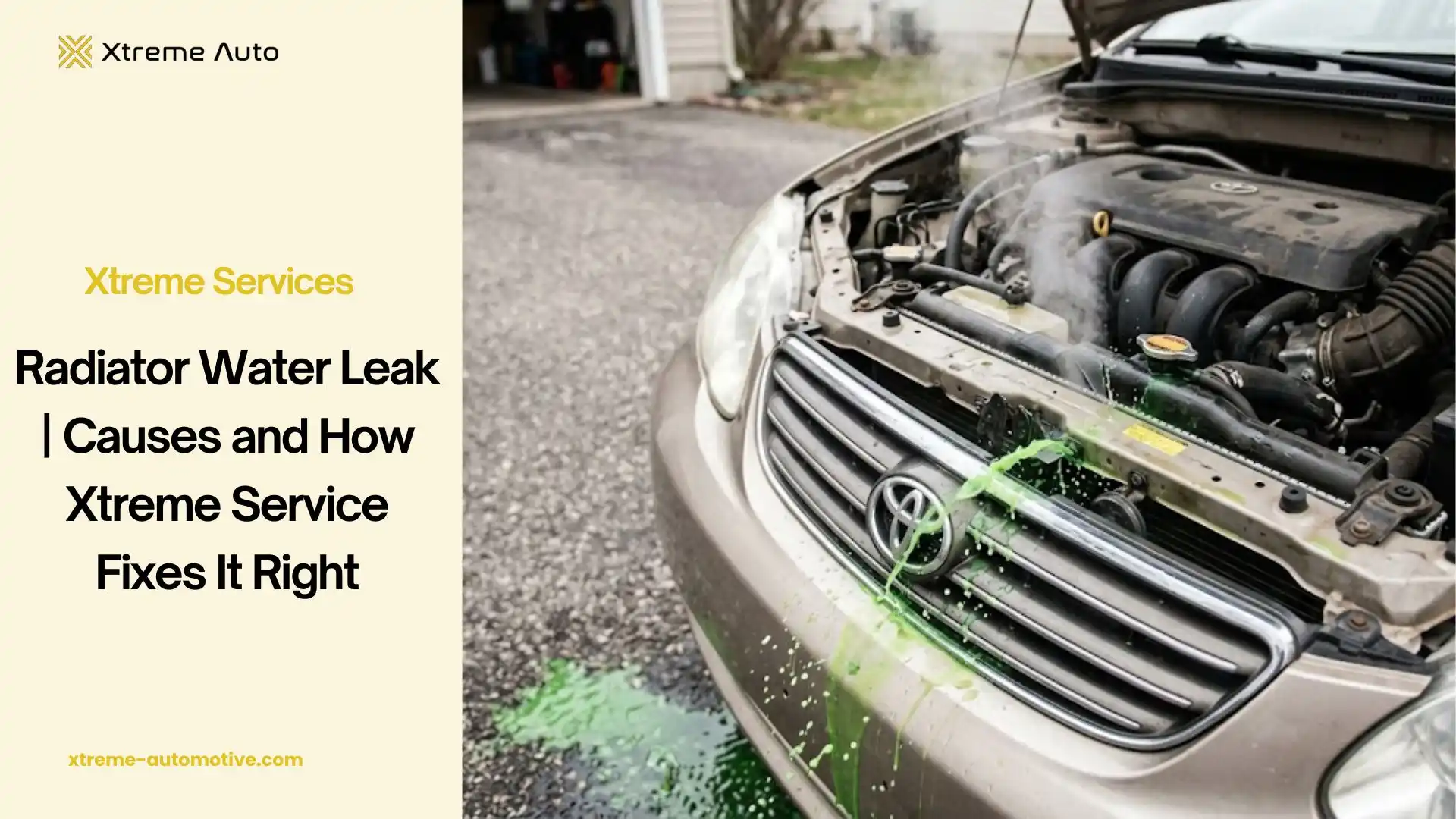
One of the most frequent issues is a radiator water leak of the cooling system, particularly during the summer season and under heavy traffic conditions on the Egyptian roads
One of the most frequent issues is a radiator water leak of the cooling system, particularly during the summer season and under heavy traffic conditions on the Egyptian roads. An insignificant leak can escalate to overheating and expensive damage in days if left untreated. Understand what causes it, early warning signs to look out for, what will cure it and where to seek proper diagnosis of it.
What Is a Radiator Water Leak and Why Is It Dangerous for Your Engine?
The radiator cools the coolant which circulates around the engine to remove heat generated from combustion. If a radiator water leak occurs, the coolant level will slowly decrease and the engine will not be able to cool effectively. This can cause the engine temperature to rise to dangerous levels and lead to a much more costly repair of the cylinder head gasket than the initial leak.
What Are the Most Common Causes of a Radiator Leak?
Internal rust and corrosion: Using plain water instead of the proper coolant, or failing to replace coolant regularly, can corrode the radiator’s internal walls and create small pinhole leaks. A radiator has no moving parts, but corrosion from inside and outside can gradually damage it and eventually cause leaks.
- Physical damage: Road debris, potholes, and minor accidents can crack the radiator body or damage its cooling fins.
- Worn hoses: Rubber hoses become stiff and develop cracks over time due to constant exposure to heat, causing leaks around the connection points.
- A faulty cap or seals: The radiator cap keeps the cooling system pressurized. If it becomes damaged or the seals fail, coolant may leak while the engine is running.
- A failing water pump: Coolant leaking from the bottom of the radiator can indicate a problem with the water pump, often caused by impact damage or damaged hoses.
How Do You Spot a Radiator Water Leak Early?
When your car is parked, one of the first indications of a leak is a puddle of coolant underneath the vehicle, as well as the following:
- Coolant, which continues to run low after frequent refilling.
- A rise in temperature that is higher than normal, particularly in traffic.
- Any sweet smell under the hood may be a sign that the coolant is evaporating from a leak.
- Steam coming out of the front of the vehicle while on the road.
Is It Safe to Drive with a Radiator Water Leak?
It is generally not safe to drive with a radiator leak, as it could result in further damage and engine overheating. The repair of a leaky head gasket can end up costing many times the price of a full engine rebuild.
If it is a real emergency, wait for the engine to cool, pour in a little water, and proceed directly to the nearest workshop.
How Is a Radiator Leak Repaired?
Liquid stop-leak products can be used to temporarily plug small pinholes, but they are not a long-term solution. The first step to a permanent fix is to identify the cause. The re-pressurization of the radiator is usually performed with a pressure kit and the water is then poured into the radiator where rising air bubbles indicate the leak.
The radiator is dried and then either sealed or the part is replaced.
The Trusted Center for Radiator Water Leak Repair - Xtreme Service
At Xtreme Service, we help drivers protect their engines from overheating and costly damage with professional cooling system inspection and repair solutions. As the dedicated after-sales service center of Xtreme Automotive, we combine experienced technicians, advanced diagnostic systems, and high-quality workmanship to accurately detect radiator water leaks and deliver reliable repairs for manual, automatic, and electric vehicles.
Professional Cooling System Inspection & Repair
No matter the cause of your radiator water leak, our team provides comprehensive solutions designed to identify the source of the problem, prevent engine overheating, and restore your vehicle’s cooling performance.
Our solutions include:
- Complete cooling system inspections using advanced diagnostic equipment.
- Accurate radiator leak detection and pressure testing.
- Radiator repair, replacement, and coolant system servicing.
- Inspection and replacement of damaged hoses, caps, and seals.
- Coolant level checks and proper coolant replacement.
- Water pump inspection and cooling system diagnosis.
- Engine overheating diagnosis and prevention.
- Preventive maintenance services to reduce future cooling problems.
- Specialized cooling system solutions for manual, automatic, and electric vehicles.
Expert Service for Leading Vehicle Brands
Our technicians are trained to diagnose and repair cooling system issues across a wide range of vehicle brands, including:
Volkswagen
- Nissan
- SEAT
- Audi
- Skoda
From a small radiator water leak to a complete cooling system issue, Xtreme Service is committed to delivering accurate diagnosis, reliable repairs, and high-quality automotive solutions that protect your engine, improve performance, and ensure a safer driving experience.
FAQs
Can I use plain water instead of coolant in an emergency?
Yes, but it's only a short-term solution until you get to a service center. Radiator corrosion will increase with the use of plain water for an extended period and the potential for future leaks will grow, so the water should be changed to proper coolant as soon as possible.
How often should coolant be changed in a car?
Normally every 40,000 to 60,000 km or every two years, depending on the manufacturer's guidelines. A regular change of coolants greatly decreases the chances of corrosion in the radiator and further leaks.
Does a radiator leak affect the car's air conditioning?
Indirectly, yes. Low coolant can cause the engine to overheat, which may mean that the AC is not as efficient or the compressor turns off to prevent the engine from being subjected to an excessive heat load.
How do I tell a radiator leak apart from an oil leak under the car?
The leak on a radiator is typically a colored puddle with a clear, sweet odor and is usually green, orange, or pink in color. Usually an oil leak is dark brown or black, thicker, and has a different smell.
Does comprehensive car insurance cover radiator leak repairs?
This will depend on the policy and the cause of the leak. Normal wear and tear damage is typically not covered, and an accident-induced leak may be covered under comprehensive insurance policies. Please read your policy or consult Xtreme's insurance page.
