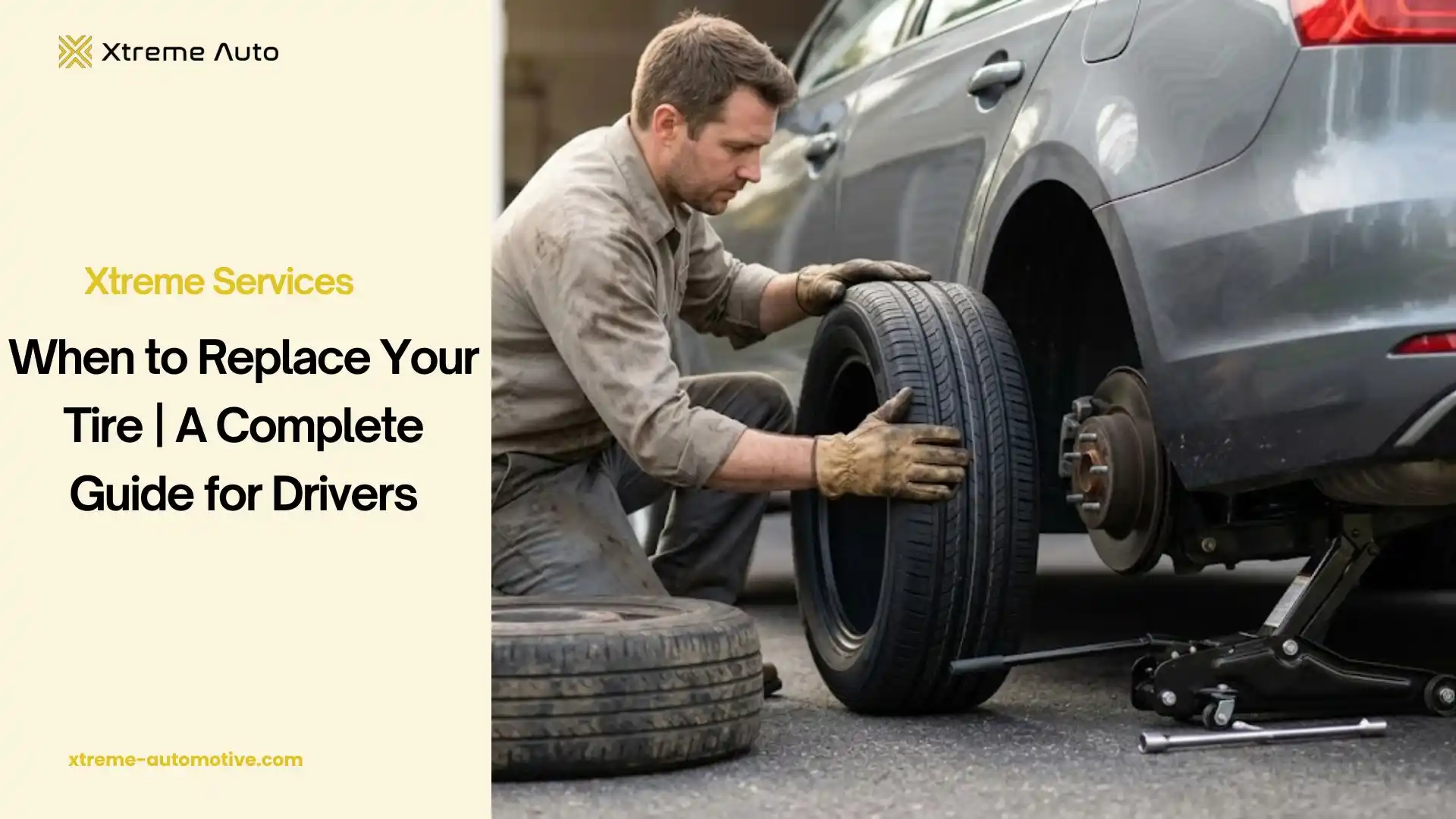
Tires are one of the most critical safety features of your vehicle because they are the only part that comes in contact with the road
Tires are one of the most critical safety features of your vehicle because they are the only part that comes in contact with the road. However, there are many drivers who don't know when to replace your tires, and they wait until it becomes a problem, or even a hazard. When you're aware of the symptoms to watch for, you can avoid poor handling, extended stopping distances, and highway blowouts. In this guide, we'll discuss the most obvious signs of tire wear and tear, so you can proactively replace your tires rather than waiting for them to wear down.
Key Signs when to replace your tires
Knowing the key signs when to replace your tires can help improve safety, maintain vehicle performance, and reduce the risk of unexpected tire failure.
1. Worn Tread Depth
The easiest way to determine when to change tires is to check the tread depth. The general rule for knowing when to replace your tires is when the tread reaches approximately 1.6 mm deep, but many drivers opt to replace them earlier, at around 3 mm, to improve grip on wet roads. A quick coin test can provide a ballpark figure between professional checks.
2. Visible Cracks or Bulges
Structural warning signs are cracks in the sidewall or a noticeable bulge in the rubber and should not be ignored. These problems can cause the tire to lose strength and may result in an unexpected blowout, making this one of the more obvious indications it should be replaced and not repaired.
3. Uneven Wear Patterns
When one part is much more worn than the others, it usually indicates alignment or suspension problems and is a good indication that new tires and an inspection are necessary soon.
4. Vibration While Driving
If it is felt through the steering wheel or seat, particularly at higher speeds, it may be due to an out-of-balance wheel or internal tire damage. This is one of the most frequent reasons drivers begin to ask you when to replace your tires, as the problem will only get worse over time.
5. Tire Age, Even With Low Mileage
Rubber naturally deteriorates over time, even if it still appears to be in good condition. Most manufacturers suggest changing the rubber after 6 years, regardless of mileage, because the rubber deteriorates over time and is less reliable, particularly in Egypt's hot summer weather.
6. Frequent Loss of Air Pressure
If you are inflating more frequently than normal, this may be a sign of a slow leak, damaged valve or normal wear and tear, which could be a cue to replacing your tires instead of patching them up.
Should You Replace One Tire or All Four?
It depends on the type of drive train you have, the condition of your tires, and how much tread you have on your new tires compared to your old tires.
- Front-Wheel Drive (FWD): If two tires have been worn down, it may be okay to replace the other two if they still have some tread left. The new tires are usually fitted to the rear wheels to enhance stability.
- Two tire replacements may also be appropriate, depending on the condition of the tires and their tread wear, depending on the type of vehicle, rear-wheel drive (RWD).
- All-Wheel Drive (AWD): Many manufacturers recommend that all four tires be replaced at the same time. A considerable difference in tread depth may place additional stress on the drivetrain and impact the vehicle's performance.
- Matching tread depth: When replacing just two tires, it is important to match tread depth as closely as possible to ensure consistent handling, braking, and safety.
- If you're not sure, a professional exam can help you decide if it's best to replace one, two or all four tires.
Turning to a Trusted Car Maintenance Center for When to Replace Your Tires
If you notice any of these warning signs, it's time to find a reliable car maintenance shop. Professional inspection means that you're not changing your tyres too soon or, more important, too late and endangering yourself while driving.
What Is the Best Car Maintenance Center in Egypt?
If you're not sure about tread depth or if you have uneven wear, Xtreme Service can accurately check and advise you when it's time to replace the tire. We use the most up-to-date diagnostic equipment to inspect tread condition, sidewall integrity, wheel alignment and balance.alignment,
Xtreme Service also maintains a full service center for manual, automatic, and electric vehicles, including diagnostics, periodic maintenance, and preventive maintenance services along with tire services. We strive to keep your vehicle running safely, efficiently, and reliably with the latest equipment and original parts.
Our tire and suspension services include the following:
- Tread depth and condition inspection
- Wheel alignment and balancing
- Tire pressure and leak checks
- Suspension and steering system inspection
- Genuine tire replacement when required
- Computerized fault diagnosis using the latest diagnostic equipment
- Full safety assessment before long trips
Complete Vehicle Maintenance Services
In addition to tire and suspension care, Xtreme Service offers:
- Comprehensive vehicle inspections
- Periodic and preventive maintenance
- Engine oil and fluid replacement
- Brake system inspections
- Air conditioning and electrical repairs
- Body repair and paint protection services
- Maintenance for manual, automatic, and electric vehicles
Book Your Tire Inspection Today
If you're unsure whether it's time to replace your tires, contact Xtreme Service today to schedule a comprehensive inspection and drive with confidence.
FAQs
Can I mix new and old tires on my car?
It is not recommended; handling and stability may be compromised if tread depth on the tires are not the same, particularly in wet or slippery conditions.
Do all four tires need to be replaced at the same time?
Not necessarily, but often it is best for consistent handling and traction, especially on all-wheel drive vehicles where the differences in tire diameter can lead to strain on the drivetrain.
How does hot weather affect tire lifespan?
Regular tire pressure checks are particularly important during the summer months in Egypt, as high temperatures can cause the rubber to deteriorate over time and can also cause the tire pressure to rise.
What's the difference between a tire repair and a full replacement?
Small holes in the tread can usually be patched, but any damage to the sidewall or large cracks or wear may mean a complete replacement.
How can I make my tires last longer?
Frequent rotation, correct tire inflation, timely wheel alignment, and avoiding hard braking and overloading the vehicle can all help to prolong the life of your tires.
